


Fall Wine Travel Guide with Perfect Appetizer Pairings and Travel Photo Ideas
Sample Fall Wine Weekend Plan
Saturday
Start your day with a leisurely breakfast at a local café, enjoying seasonal pastries and a warm beverage. After breakfast, head to a nearby vineyard for a guided tour and tasting session, where you can learn about the winemaking process and sample a variety of wines. For lunch, visit a charming bistro in the area, featuring a menu that pairs perfectly with the local wines. Afterward, take a scenic drive through the countryside, soaking in the vibrant fall foliage. In the afternoon, consider participating in a wine blending workshop at one of the wineries, where you can create your own unique blend to take home. As evening approaches, enjoy a gourmet dinner at a renowned restaurant that specializes in farm-to-table cuisine, complemented by a carefully curated wine list. Wrap up your Saturday with a cozy bonfire experience at your accommodation, complete with s'mores and a selection of dessert wines to savor under the stars.
Sunday
Begin your Sunday with a hearty brunch at a local eatery, featuring seasonal ingredients and, of course, mimosas or a local sparkling wine. After brunch, visit a farmers' market to pick up some fresh produce and artisanal goods to take home. Next, explore a couple of smaller, boutique wineries that you may have missed on Saturday. Enjoy tastings and perhaps even some live music or local art exhibits. Before heading home, stop by a local shop to purchase a few bottles of your favorite wines from the weekend as souvenirs. Conclude your weekend with a relaxing drive back, reflecting on the delightful experiences and flavors you encountered.
Fall is the season when wine travel feels least rushed and most rewarding. Vineyard rows turn gold, tasting rooms ease out of summer crowds, and cool afternoons make a glass of Pinot Noir or Chardonnay feel exactly right. It is also the season when a bottle bought on the road deserves more than a spot in the trunk. It deserves a plan.
A good fall wine trip is part scenic drive, part tasting adventure, and part edible souvenir hunt. The best bottles often remind you of where you found them, especially when you open them later with the right appetizer. A crisp white from a hillside tasting room can bring back the smell of fallen leaves. A peppery red can replay a chilly evening by an outdoor fire pit.
This Fall Wine Travel Guide with Perfect Appetizer Pairings and Travel Photo Ideas will help you choose where to go, what to buy, what to serve with your bottles, and how to capture the experience without turning the trip into a photo shoot.

Why fall is such a strong season for wine travel
Fall wine trips have a different rhythm than summer tasting weekends. The air is cooler, the food feels heartier, and many wine regions are still buzzing with harvest energy. Depending on the region and the timing of your visit, you may see fruit coming in from the vineyard, smell fermenting grapes near winery production areas, or find tasting menus built around seasonal ingredients.
The season also gives you range. You can plan a cozy long weekend in a nearby wine region or build a larger road trip across several stops. Across the United States, fall wine travel works especially well in places such as:
California wine country, where Napa, Sonoma, Paso Robles, and Santa Barbara County offer a mix of famous estates and smaller producers.
The Pacific Northwest, where Oregon’s Willamette Valley and Washington’s Walla Walla region shine with cool-climate wines and dramatic autumn scenery.
The Finger Lakes, where Riesling, Cabernet Franc, and lake views make for a crisp, scenic getaway.
Virginia wine country, where mountain drives and historic towns pair well with tastings.
Texas Hill Country, where warm afternoons, live oak trees, and laid-back tasting rooms create an easygoing fall route.
Michigan wine regions, especially around the Leelanau and Old Mission peninsulas, where lake influence, orchard country, and white wines make a memorable combination.
The main advantage of traveling in fall is the mix of comfort and character. You can wear layers, linger outdoors, and enjoy richer appetizers without fighting heavy heat. Wines with texture, spice, earthiness, and bright acidity all feel at home this time of year.
How to plan a fall wine route that feels relaxed
A wine trip goes better when you plan fewer stops and leave room for surprise. Three tastings in one day is usually enough for most travelers, especially if the wineries are spread out or offer seated experiences. Two may be perfect if lunch, photography, shopping, or a scenic walk is part of the plan.
Start by choosing a base town, then build your route in a loose loop. This keeps driving simple and gives the day a natural flow. Look for a mix of tasting styles. One polished estate, one small family-run winery, and one place with a great view can make a day feel balanced.
Before you go, check each winery’s current tasting policy. Many tasting rooms now encourage or require reservations, especially on weekends. If bringing home bottles is part of the trip, ask about shipping rules and seasonal considerations. Wine does not love extreme heat or freezing cold, so keep bottles in the passenger area rather than a hot trunk or freezing cargo space when possible.
A simple road-trip kit helps too:
A small cooler or insulated wine tote
Reusable water bottles
Plain crackers or breadsticks
A notebook or tasting app for quick notes
A corkscrew for later, if your lodging allows it
A tote bag for local crackers, cheese, nuts, or preserves
If you plan to taste and drive, keep the day responsible. Share pours, use spit buckets, hydrate, eat, and choose a designated driver or hire local transportation when needed. A slower trip is often the better trip.
What wines to bring home in fall
The best travel bottles are not always the biggest or most expensive ones. Choose wines that have a clear memory attached to them. Maybe the winemaker poured it for you. Maybe it tasted perfect with the weather. Maybe it comes from a grape you rarely find at home.
Fall is a good time to look for bottles that fit seasonal cooking and appetizers. These styles are especially useful after a trip:
Sparkling wine
Sparkling wine is the easiest bottle to open first. It works with salty snacks, fried appetizers, soft cheeses, and smoked fish. It also turns a casual unpacking night into a celebration.
Crisp white wine
Sauvignon Blanc, dry Riesling, Albariño, Pinot Gris, and unoaked Chardonnay work well with goat cheese, seafood bites, roasted vegetables, and tangy dips. These wines are valuable because they wake up the palate.
Fuller white wine
Barrel-aged Chardonnay, Viognier, Marsanne blends, and richer white blends are made for creamy appetizers, baked cheese, mushrooms, squash, and buttery pastry.
Rosé
Do not leave rosé behind after summer. Fall rosé can be excellent with charcuterie, roasted peppers, salmon spread, and herbed flatbreads.
Light to medium red wine
Pinot Noir, Gamay, Cabernet Franc, Grenache, and lighter red blends are fall favorites. They pair well with mushrooms, duck, pork, pâté, and earthy cheeses.
Bolder red wine
Cabernet Sauvignon, Syrah, Zinfandel, Malbec, and Merlot-based blends work best with richer appetizers. Think grilled sausage bites, aged cheddar, meatballs, steak crostini, and smoky dips.
Dessert or late-harvest wine
A small bottle of dessert wine can be one of the most fun purchases of the trip. Serve it with blue cheese, toasted nuts, apple tartlets, or shortbread.

Appetizers to try after purchasing wines for your travels
Opening a bottle after a wine trip should feel easy, not like hosting a formal dinner. Appetizers are ideal because they let the wine stay at the center while giving everyone something satisfying to taste.
Use the table below as a starting point. The goal is balance. Match bright wines with salty or tangy bites, rich wines with creamy or savory foods, and bold reds with protein or deeper flavors.
Wine you bought | Appetizer to serve | Why it works |
Sparkling wine | Potato chips with crème fraîche and chives | Bubbles cut through salt and cream beautifully. |
Sauvignon Blanc | Whipped goat cheese with lemon and herbs | Tangy cheese matches the wine’s crisp edge. |
Dry Riesling | Pork and ginger dumplings | A touch of sweetness and acidity handles spice and richness. |
Pinot Gris | Pear, prosciutto, and arugula crostini | Fruit and salt bring out the wine’s freshness. |
Unoaked Chardonnay | Crab cakes or shrimp toast | Clean citrus notes work well with sweet seafood. |
Barrel-aged Chardonnay | Baked brie with apple butter | Creamy cheese and gentle oak feel warm and seasonal. |
Rosé | Roasted red pepper hummus with pita | Rosé handles garlic, smoke, and sweet pepper flavors. |
Pinot Noir | Mushroom tartlets with thyme | Earthy mushrooms echo the wine’s savory side. |
Cabernet Franc | Mini lamb sliders or herbed meatballs | Herbal notes in the wine pair well with savory meat. |
Syrah | Spiced sausage bites with grainy mustard | Peppery wine stands up to spice and smoke. |
Cabernet Sauvignon | Steak crostini with horseradish cream | Tannin works with protein and rich toppings. |
Late-harvest wine | Blue cheese with toasted walnuts | Sweet wine and salty cheese create a classic contrast. |
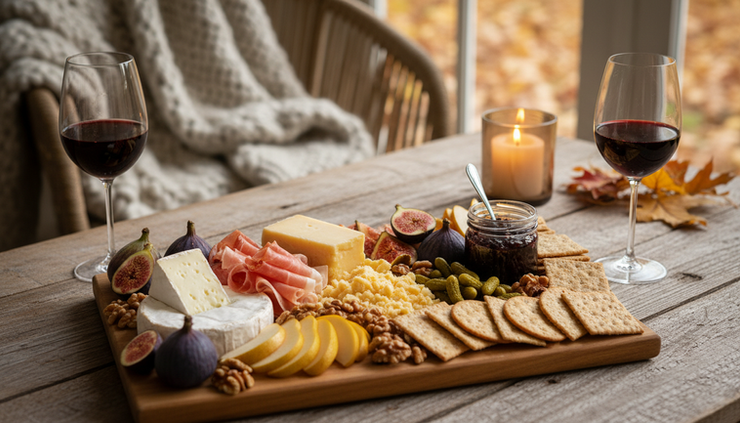
A simple fall appetizer board for mixed bottles
If you bought several wines and do not want to cook, build a board with a few flexible pieces. This works especially well on the first night back from a trip.
Include:
Soft cheese, such as brie, camembert, or goat cheese
Firm cheese, such as aged cheddar, gouda, or manchego
Cured meat, such as salami, prosciutto, or bresaola
Roasted nuts, especially almonds, walnuts, or pecans
Seasonal fruit, such as figs, pears, apples, or grapes
Something pickled, such as cornichons or pickled onions
Something sweet, such as fig jam, honey, or apple butter
Crackers, baguette slices, or seeded flatbread
For white wines and sparkling wines, lean into goat cheese, apples, seafood spreads, and salty snacks. For reds, add mushrooms, aged cheese, charcuterie, and roasted nuts. For sweet wines, keep the portions small and intense with blue cheese, dried fruit, and spiced cookies.
Easy appetizers that travel well in spirit
Some appetizers bring the feeling of wine country home because they are simple, seasonal, and built around good ingredients.
Mushroom and thyme tartlets
Use store-bought puff pastry, sautéed mushrooms, thyme, and a little grated cheese. Serve with Pinot Noir, Gamay, or Chardonnay.
Whipped ricotta with honey and cracked pepper
Spread whipped ricotta in a shallow bowl, add honey, olive oil, pepper, and toasted pistachios. Serve with sparkling wine, rosé, or dry Riesling.
Roasted grape and goat cheese crostini
Roast grapes until they soften and split, then spoon them over goat cheese on toasted bread. Serve with Sauvignon Blanc, Pinot Gris, or sparkling wine.
Warm olives with citrus and rosemary
Heat mixed olives with orange peel, rosemary, garlic, and olive oil. Serve with rosé, Grenache, or crisp white wine.
Mini meatballs with tomato and herbs
Keep them small and serve with toothpicks. Pair with Cabernet Franc, Merlot, Zinfandel, or Syrah.
Travel photo ideas that tell the story of the trip
The best wine travel photos are not only pictures of glasses. They show place, season, and small details. Fall gives you plenty to work with, from low sunlight to leaf-covered cellar doors.
Try to capture a mix of wide, medium, and close-up shots. That gives your photo collection the feel of a story rather than a set of repeated tasting-room images.
Photos to take at the vineyard
Start with the setting before you focus on the wine. Wide shots help you remember the region and the mood of the day.
Good vineyard photo ideas include:
Rows of vines curving toward hills or trees
Fallen leaves caught between vine trunks
A gravel road leading to a tasting room
Grapes still hanging on the vine, if present
Morning fog over a valley
Golden-hour light on vineyard posts
Boots or walking shoes on a leaf-covered path
For stronger photos, shoot early or late in the day when the light is softer. Midday sun can flatten vineyard photos, especially if the sky is bright.
Photos to take during a tasting
Respect the tasting room’s rules and the comfort of staff and other guests. You can still get beautiful photos without interrupting the experience.
Focus on:
A glass held near a vineyard view
A tasting flight arranged on a wood counter
A handwritten tasting note beside a bottle
Corks, capsules, or a map of the region
Cheese, crackers, or small bites next to a pour
The texture of a stone wall, barrel room, or outdoor table
Avoid trying to photograph every glass. Pick two or three moments that feel natural. Your photos will look better, and you will enjoy the tasting more.
Photos to take after the purchase
Bottle photos are most meaningful when they show context. Instead of lining up bottles against a plain wall, place them in a scene.
Try these ideas:
Bottles in a wine tote beside fall leaves
A purchased bottle on a picnic table with local cheese
A label-free backlit silhouette near a window
A cork next to the appetizer you served at home
A map with your route and one favorite bottle
A harvest-colored table setting before friends arrive
If you share photos later, avoid posting close-ups of private addresses, full license plates, or personal travel documents. Keep the memory, skip the information you do not need to show.
How to pack and serve bottles after the trip
Wine bottles are sturdy, but they still need care. If you drive, keep them stable and away from heat or direct sun. An insulated carrier helps during warmer fall afternoons. If temperatures drop sharply, do not leave wine in a freezing car overnight.
If you fly, review current airline and TSA rules before packing. Wine in carry-on bags is restricted because of liquid limits, so most bottles need to go in checked luggage or be shipped where allowed. Use padded wine sleeves or molded inserts made for bottles. A sweater wrapped around a bottle is better than nothing, but proper bottle protection is safer.
At home, let the bottles rest for a few days if they had a bumpy ride. This is especially helpful for older wines or delicate reds. Store bottles away from light and temperature swings. A closet or interior cabinet is often better than a sunny kitchen counter.
When serving, do not overthink the temperature.
Sparkling wine tastes best well chilled.
Crisp whites and rosés should be chilled, then allowed to warm slightly in the glass.
Fuller whites often taste better not ice cold.
Light reds can take a short chill.
Bold reds usually show well slightly cooler than a warm room.
Open one bottle, serve one appetizer, and let the memory of the trip do some of the work.

A Sample Fall Wine Weekend Plan
Experience the beauty of fall while indulging in exquisite wines. Here's a suggested itinerary for a perfect wine weekend getaway:
Day 1: Arrival and Tasting
Afternoon: Arrive at your destination and check into your accommodation.
Evening: Head to a local vineyard for a sunset wine tasting. Enjoy a selection of their finest wines paired with artisanal cheeses.
Day 2: Vineyard Tours and Culinary Delights
Morning: Start your day with a hearty breakfast at a nearby café.
Late Morning: Visit a couple of local wineries for guided tours and tastings. Learn about the winemaking process and the unique characteristics of the region.
Lunch: Enjoy a picnic lunch at one of the wineries, featuring local produce and bread.
Afternoon: Continue your wine exploration with a visit to a winery known for its stunning views and outdoor tasting area.
Evening: Dine at a restaurant that specializes in farm-to-table cuisine, complemented by local wines.
Day 3: Relaxation and Departure
Morning: After breakfast, take a leisurely stroll through the vineyard or enjoy a spa treatment at your accommodation.
Late Morning: Visit a local market to pick up some wine and gourmet goods to take home.
Afternoon: Check out of your accommodation and head home, reminiscing about your delightful wine weekend.
This plan allows you to savor the flavors of the season while enjoying the scenic beauty of fall. Cheers!
A loose plan keeps the trip organized without making it feel scheduled by the minute. Here is a simple model that works for many wine regions.


Comments